
Building Better Ballparks: Designing for What’s Next
BY RON DUBAS, PRESIDENT OF USS
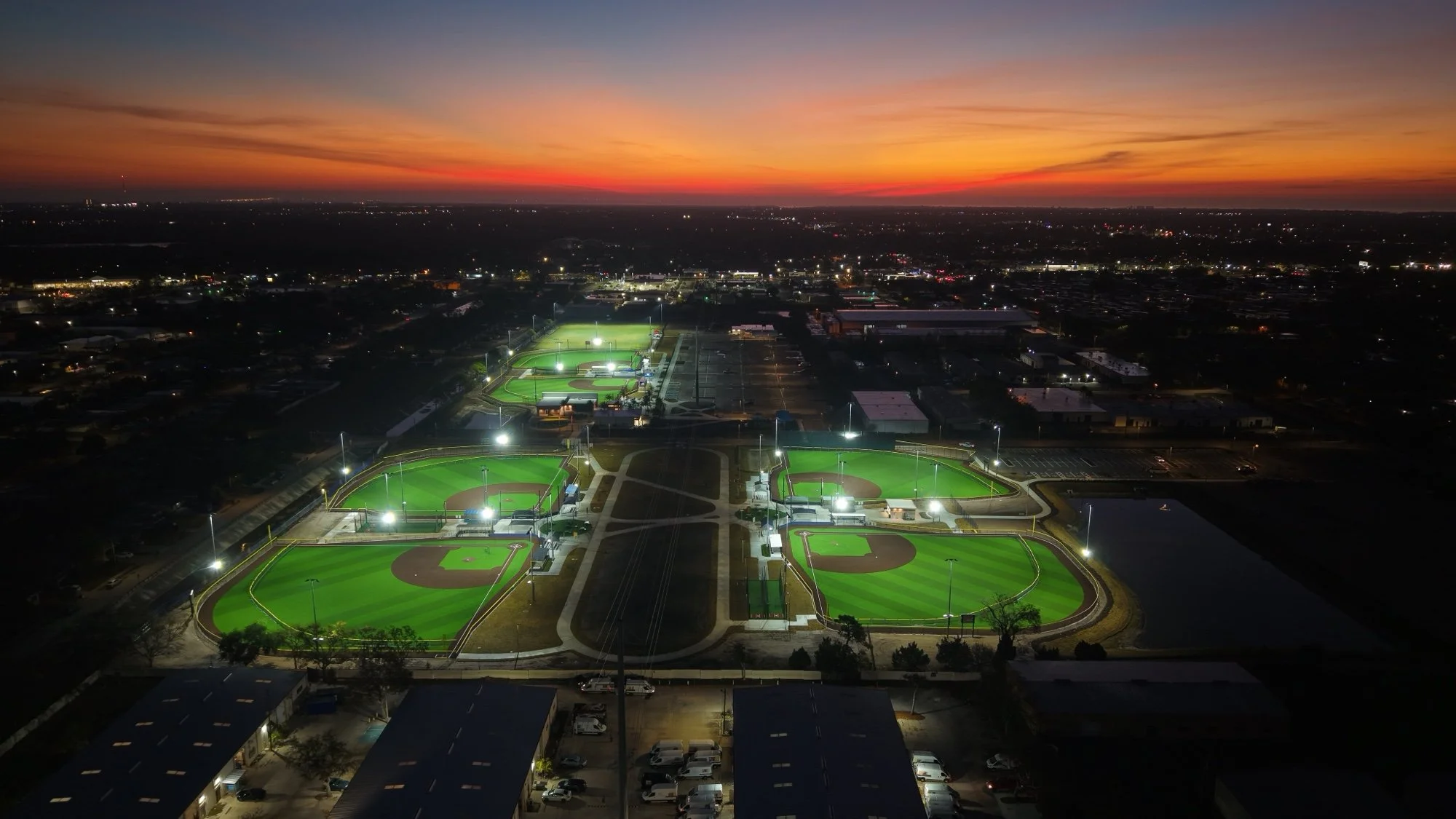
As I kick off this series of “Building Better Ballparks: Lessons in Designing Safer, Smarter Athletic Facilities,” exploring emerging trends in sports facility design provides a great starting point.
As I mentioned in the introduction, my goal is to provide practical information that helps owners and project stakeholders make informed decisions and maximize the value of their investment.
Most projects begin with an understanding of today's needs. A good partner helps define those needs and design around them. A great partner takes it a step further by helping clients consider what the facility will need five, ten, or twenty years from now.
That means asking great questions such as:
What sports might this facility support in the future?
What happens if participation exceeds expectations?
How might spectator expectations change?
How will heat and weather affect utilization?
Which components would be expensive to retrofit later?
One way to answer these questions is by understanding emerging trends in athletic facility design.
(1) Climate-Resilient Facilities
Extreme heat, severe weather, drought, and excessive precipitation are increasingly important design considerations.
Trends include greater shade coverage, larger covered dugouts and player shelters, cooling and hydration stations, weather-resistant materials, and lighting that allows activities to shift to cooler hours.
The goal is to create facilities that are safer, more comfortable, and more usable in changing conditions.
(2) Flexible, Multi-Use Facilities
The traditional model is:
One field → One sport → One primary user
The emerging model is:
One facility → Multiple sports → Multiple users → More utilization
Planning for flexibility during initial design is far less costly than trying to add it after construction. Owners should consider not only how a facility will be used today, but how it might be used in the future.
(3) Designing Around the Entire Experience
Athletes are the primary users, but they aren't the only users.
Parents, spectators, coaches, tournament operators, community members, and employees all contribute to a facility's success.
An emerging trend is focusing more attention to areas outside the field of play to address the experience and safety of the other users. Shaded comfortable seating, play areas, Wi-Fi and charging capability, play areas, improved food and beverage offerings, and safe separation from the field of play action are some of the experience considerations.
A great facility doesn't simply provide a place to play, it creates an environment people want to return to.
(4) Technology Becomes Infrastructure
Technology once considered a luxury is becoming commonplace. Automated irrigation, smart lighting, Wi-Fi, digital scoreboards, streaming cameras, video analysis, and real-time weather monitoring are examples.
The question isn't only what technology a facility needs today, but whether its infrastructure can accommodate what comes next.
(5) Renovation and Adaptive Reuse
The cost of new construction can be significant. Communities are increasingly looking at ways to preserve existing facilities while improving their safety, functionality, and appearance.
Upgrading netting, shade, dugouts, padding, batting cages, and other components can extend a facility's useful life without requiring a complete rebuild.
(6) Safety as a Design Priority
Safety is no longer simply about meeting minimum codes and standards. Owners are increasingly making safety an intentional part of the facility's design and marketing it to perspective teams and participants.
That includes ball containment, protective padding, heat mitigation solutions, covered player areas, spectator safety, pedestrian circulation, and separation between players and spectators.
The best safety features are often the ones considered before construction, not after a problem occurs.
(7) Sports Facilities as Destinations
Large sports complexes are increasingly expected to contribute to local economic development. They generate hotel stays, restaurant spending, tourism, tournament revenue, and community activity.
That means parking, circulation, shade, concessions, restrooms, spectator areas, and hospitality are becoming just as important to the overall experience as the fields themselves.
Looking Beyond Today
Emerging trends aren't about predicting the future perfectly. They're about recognizing where athletic facility design is headed and making thoughtful decisions today that provide flexibility tomorrow.
At Unlimited Sports Solutions, we strive to be a partner who helps owners, designers, and builders create safer, smarter, more comfortable, and more resilient athletic facilities.
Because building better ballparks isn't just about building for today. It's about building for what's next.