
Building Better Ballparks: Designing Safety Into Every Detail
BY RON DUBAS, PRESIDENT OF USS
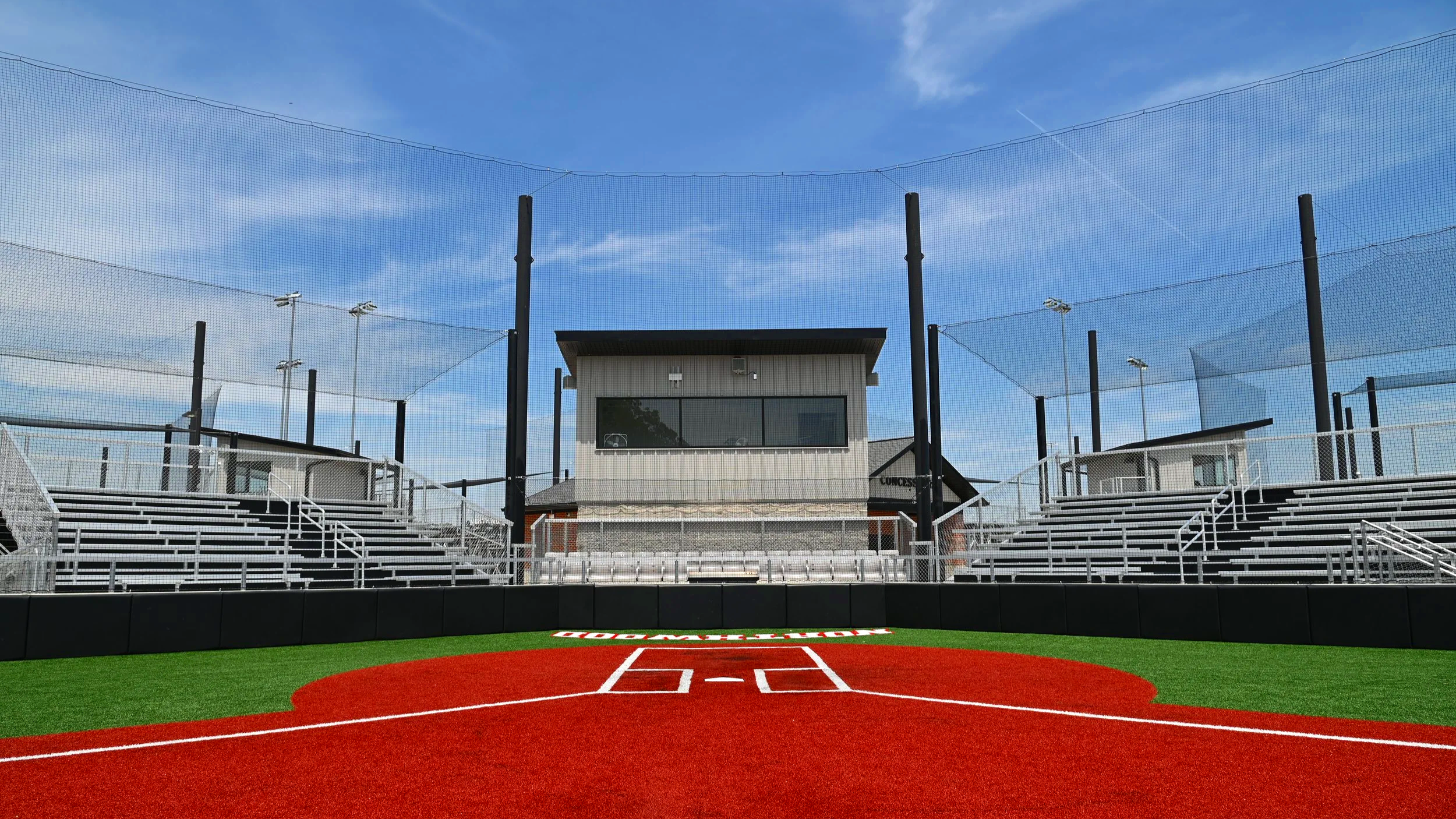
When we talk about designing a great athletic facility, the conversation often starts with the things everyone can see: the playing surface, dugouts, grandstands, press boxes, lighting, scoreboards and amenities.
But one of the most important considerations in any athletic facility is something that should never be overlooked: SAFETY.
Safety isn't simply about meeting a code or checking a box on a project checklist. The best facilities take a more proactive approach by considering how athletes, coaches, officials, spectators and facility staff will interact with the space and identifying potential risks before they become problems.
sAFETY sTARTS WITH PLANNING
One of the biggest mistakes in facility design is treating safety as an afterthought.
By the time construction begins, many important decisions have already been made. If safety considerations aren't incorporated during the planning and design process, addressing them later can be more expensive, less effective and sometimes impossible without compromising the original design.
A better approach is to ask safety-related questions early:
Where are athletes most likely to be exposed to errant balls?
Are there areas where players, coaches and spectators could unexpectedly cross paths?
Does the facility provide adequate protection around playing areas?
Are there potential collision points?
How will the facility be used five, ten or twenty years from now?
Can safety equipment be maintained or replaced without significant disruption?
Are we designing for the way the facility will actually be used, not simply the way it appears on a set of plans?
These questions can influence everything from netting and padding to dugout design, fencing, player circulation and spectator areas.
Think Beyond the Minimum
Codes, standards and governing-body requirements provide an important baseline. But meeting the minimum requirement shouldn't necessarily be the end goal.
A facility can be technically compliant and still have opportunities to improve safety.
For example, protective padding isn't simply about putting padding where a specification calls for it. The location, thickness, attachment method, durability and coverage all matter. The same is true with netting. Understanding ball trajectories, viewing areas, field orientation and how spectators use the facility can help determine whether the protection provided is appropriate for the application.
The goal should be to ask:“What could happen here?”.
Rather than simply: “What does the specification require?”.
That shift in thinking can lead to better decisions.
Safety Is Also About the Details
Some of the most important safety considerations are easy to overlook because they aren't necessarily the most visible features of a facility.
Hardware, edges, transitions, structural connections, padding seams, access points and circulation paths can all affect how safely a facility operates.
Consider the experience of a young athlete moving from a dugout onto the field. Consider a coach moving equipment through a gate. Consider a spectator walking around the perimeter of a field. Consider maintenance personnel accessing equipment years after the facility is completed.
Each interaction presents an opportunity to either reduce or introduce risk.
Good design considers those interactions before the facility opens.
Don't Forget Heat and Environmental Safety
Safety also extends beyond physical contact.
Heat exposure is an increasingly important consideration for outdoor athletic facilities. Shade structures, covered dugouts, seating areas and thoughtful site planning can provide athletes and spectators with opportunities to get out of direct sunlight.
These features can improve comfort, but more importantly, they can become part of a broader strategy for managing heat exposure during long periods outdoors.
Similarly, drainage, lighting, visibility, weather exposure and emergency access should all be considered as part of the facility's overall safety plan.
Check out Ron’s article on heat safety!
Design for the Future
A ballpark isn't finished when the construction crew leaves.
Products will age. Usage will change. Equipment will be replaced. New programs may be added. Maintenance practices will evolve.
That means safety should be considered from a lifecycle perspective.
Ask questions such as:
Can protective products be inspected easily?
Can damaged components be repaired or replaced?
Are replacement parts readily available?
Is maintenance access safe and practical?
Will the facility continue to provide appropriate protection as usage increases?
A lower initial cost doesn't always represent the best long-term value if a product or design requires frequent replacement or creates expensive retrofit challenges.
Safety Is Everyone's Responsibility
Ultimately, creating a safer athletic facility isn't the responsibility of one person or one company.
Owners, architects, engineers, contractors, sports equipment suppliers, installers and facility operators all have a role to play.
The strongest projects are the ones where those groups communicate early and consistently.
A supplier may see a potential issue that isn't obvious on a set of plans. An experienced installer may identify a field condition that affects how a product should be installed. A facility operator may understand how a space will actually be used better than anyone involved in the design.
Bringing those perspectives together can make the entire project better.
Build Safety In—Don't Add It Later
The best safety solutions are often the ones that were considered before there was a problem.
When safety is incorporated into the design process from the beginning, it becomes part of the facility rather than an add-on. It can improve the athlete experience, protect spectators, simplify maintenance and potentially reduce costly modifications down the road.
At Unlimited Sports Solutions, we believe building better ballparks means looking beyond what a facility needs to look like and focusing on how it needs to perform.
Because a successful athletic facility isn't simply one that looks great on opening day.
It's one that remains safe, functional and valuable for the people who use it for years to come.